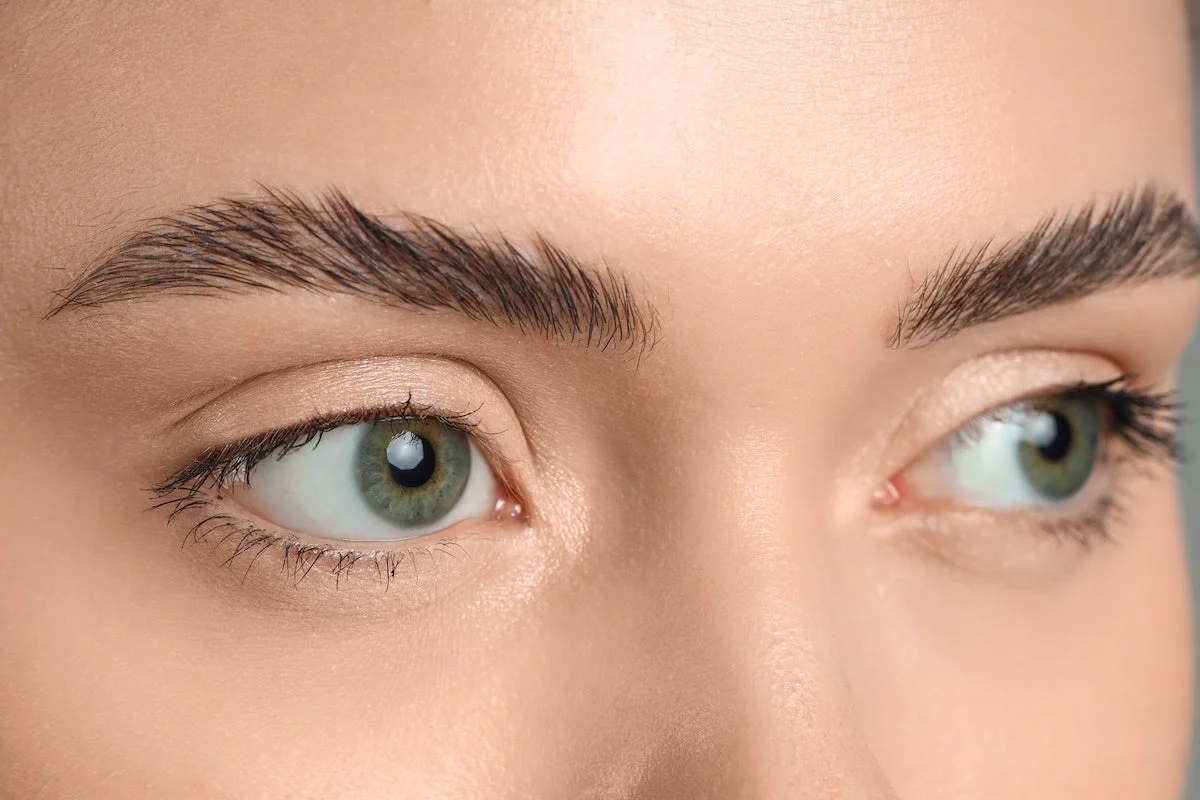
Having “one eye bigger than the other“ is extremely common—in fact, perfectly symmetrical faces are the exception, not the rule. Most people have some degree of facial asymmetry, often caused by natural variations in bone structure, muscle tone, or the position of the eyelid (ptosis). Unless the change is sudden or accompanied by vision issues, it is usually just a unique physical trait that most people don’t even notice.
That said, if the asymmetry is new, has developed suddenly, or is accompanied by other symptoms – drooping, pain, vision changes – it’s worth getting checked. The difference between lifelong asymmetry and a new change is the key thing to pay attention to.
Why One Eye Looks Bigger: Common Natural Causes
- Facial bone asymmetry – the underlying skull structure differs slightly side to side
- Muscle imbalance around the eye socket
- Natural variation in eyelid fold depth or crease position
- Dominant eye – one eye may naturally open slightly wider
- Eyebrow position – a higher brow on one side can make that eye look larger
Natural vs. Medical Causes: At a Glance
| Cause | Type | Other Symptoms | Urgent? |
| Natural facial asymmetry | Normal | None – lifelong and stable | No |
| Ptosis (drooping eyelid) | Medical | Eyelid visibly droops, may affect vision | See doctor |
| Horner’s syndrome | Medical | Small pupil, drooping, no sweating on one side | Yes – urgent |
| Graves’ disease (thyroid eye) | Medical | Bulging eye, irritation, double vision | See doctor |
| Orbital cellulitis | Medical | Redness, pain, swelling, fever | Emergency |
| Bell’s palsy | Medical | Facial drooping, difficulty closing eye | See doctor |
| Sleeping position / habits | Lifestyle | One-sided puffiness in the morning | No |
Ptosis: The Most Common Medical Cause
Ptosis is a drooping of the upper eyelid – it can make one eye appear noticeably smaller. It’s sometimes present from birth (congenital ptosis) or develops later due to aging, injury, or nerve damage.
In adults, new-onset ptosis should always be evaluated. In children, untreated ptosis can affect vision development and may require surgery.
When to See an Eye Specialist
- The asymmetry has appeared or worsened suddenly (days to weeks)
- One eye appears to be bulging or protruding forward
- You notice a drooping eyelid, especially if it’s new
- Your pupil sizes are different (anisocoria)
- You have double vision, blurred vision, or pain around the eye
- One side of your face feels numb or weak
What a Doctor Will Check
An ophthalmologist or neurologist will typically assess: pupil size and reactivity, eyelid position and movement range, eye muscle function, and whether the difference has been stable or is new. Imaging (MRI or CT) may be ordered if a neurological cause is suspected.
Practical Advice for Stable, Lifelong Asymmetry
If you’ve had unequal-looking eyes all your life and there’s no change, there’s nothing medically concerning. Many people find that makeup, eyebrow shaping, or even adjusting hair style can balance the appearance. But for most people, it’s genuinely less noticeable to others than it feels to yourself – the brain’s tendency to fixate on its own reflection often exaggerates the perceived difference.